
Blog Details
Diskava. Beta. Kava
01Aug
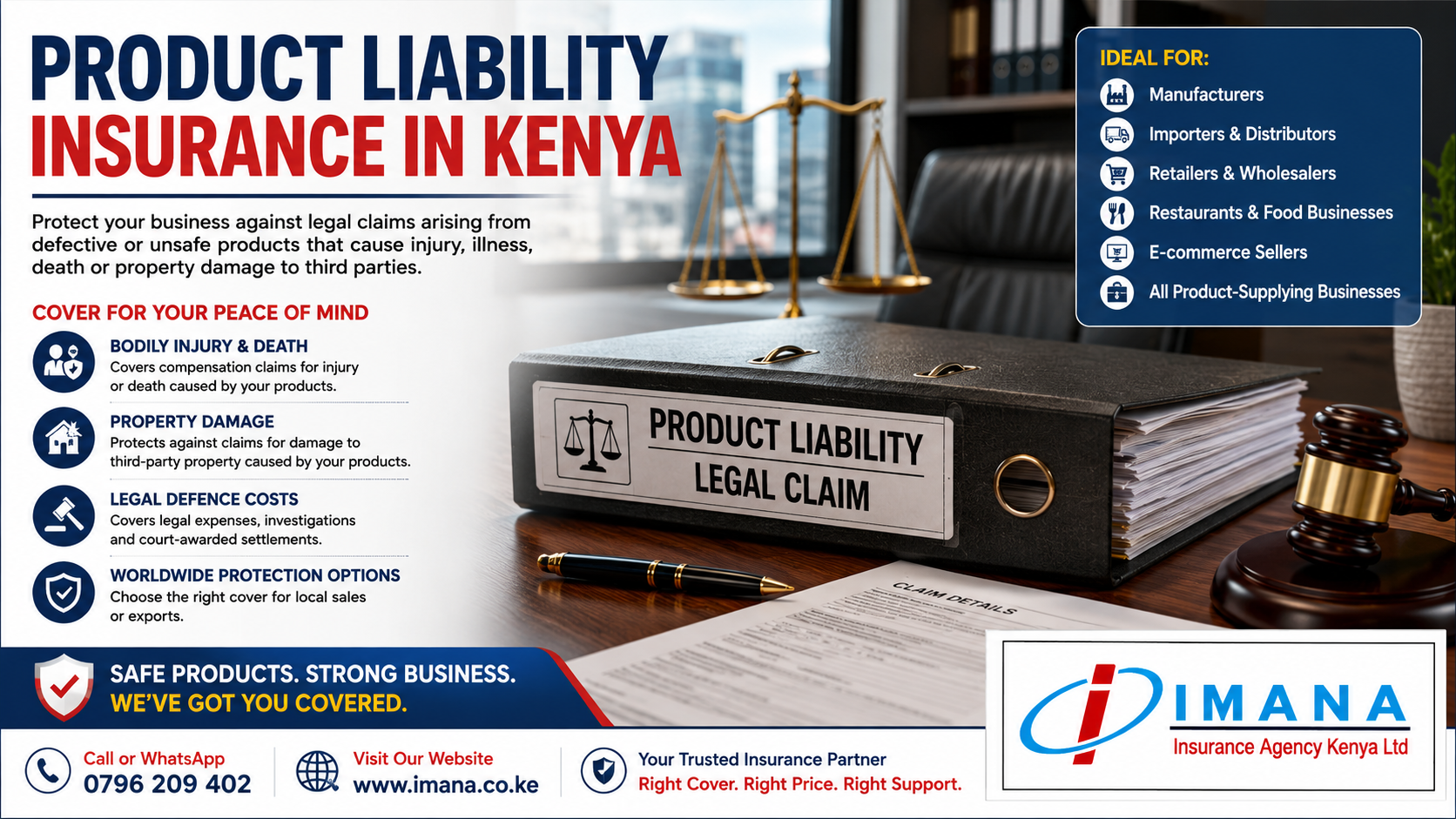
Product Liability Insurance in Kenya | Manufacturers and Retailers
Learn how Product Liability Insurance in Kenya protects manufacturers, importers, distributors, retailers and restaurants against claims involving defective or unsafe products.
What Happens When a Product Injures a Customer?
A business may manufacture, import, distribute or sell hundreds of products without experiencing a serious incident.
However, one defective item can cause:
- Bodily injury
- Illness
- Accidental death
- Fire
- Damage to a customer’s property
- Product recall expenses
- Legal proceedings
- Regulatory investigation
- Reputational damage
For example:
- Contaminated food causes customers to become ill.
- A faulty electrical appliance causes a fire.
- A defective chair collapses and injures a customer.
- A chemical product damages machinery belonging to a buyer.
- A poorly manufactured vehicle component contributes to an accident.
- Incorrect product instructions lead to injury.
- A pharmaceutical or cosmetic product causes an adverse reaction.
The affected customer may demand compensation from the manufacturer, importer, distributor, wholesaler or retailer.
Product Liability Insurance is designed to protect a business against eligible legal liability arising when a product it manufactured, imported, distributed, supplied or sold causes accidental bodily injury, death or damage to third-party property.
The Insurance Regulatory Authority publishes a standardised Products Liability Insurance Policy, confirming product liability as a recognised insurance solution within Kenya’s general-insurance market. (Insurance Regulatory Authority)
Selling a product does not end your responsibility. A claim may arise long after the item has left your factory, warehouse, shop or restaurant.
What Is Product Liability Insurance?
Product Liability Insurance protects a business against specified third-party claims arising from products that have left the insured’s possession or control.
Depending on the policy, it may cover eligible claims involving:
- Accidental bodily injury
- Accidental illness
- Accidental death
- Third-party property damage
- Legal defence costs
- Court-awarded compensation
- Approved settlements
- Claim investigation expenses
The claim must normally arise from a product connected to the insured business and supplied during the applicable insurance period or retroactive period, depending on the wording.
Product Liability Insurance does not guarantee the product’s quality or replace the business’s responsibility to comply with manufacturing, labelling and consumer-protection laws.
Why Product Liability Insurance Matters in Kenya
Kenyan consumers have constitutional and statutory rights relating to the quality, safety and description of goods and services.
The Consumer Protection Act was enacted to protect consumers and prevent unfair practices in consumer transactions. The Competition Act also contains provisions addressing liability where manufacturers supply unsuitable goods.
Kenya’s Standards Act requires manufacturers to ensure that products are designed and manufactured in accordance with applicable standards. The current consolidated version was updated in July 2026. (Kenya Law)
Businesses should therefore manage both:
- The legal and operational responsibility to supply safe products
- The financial risk created when a customer alleges that a product caused harm
Insurance addresses the second risk. It does not remove the first.
Who Needs Product Liability Insurance?
Product Liability Insurance may be relevant to any business involved in placing goods into the market.
Manufacturers
Manufacturers can face claims arising from:
- Design defects
- Manufacturing defects
- Contamination
- Incorrect ingredients
- Faulty components
- Poor quality control
- Inadequate warnings
- Incorrect instructions
Examples include manufacturers of:
- Food and beverages
- Furniture
- Construction materials
- Electrical products
- Machinery
- Cosmetics
- Cleaning products
- Clothing
- Vehicle components
- Packaging
- Agricultural products
Importers
An importer may face liability even where the product was manufactured outside Kenya.
The overseas manufacturer may be:
- Difficult to identify
- Outside Kenyan jurisdiction
- Financially unable to meet a claim
- Unresponsive
- Operating under different legal standards
Importers should therefore consider themselves part of the product-supply chain rather than assuming all responsibility remains with the foreign manufacturer.
Distributors and Wholesalers
A distributor may face allegations involving:
- Supplying defective goods
- Poor storage
- Contamination
- Incorrect relabelling
- Failure to follow recall instructions
- Supplying expired products
- Loss of temperature control
Retailers and Supermarkets
Retailers may face claims even where they did not manufacture the product.
A customer may initially make a claim against the business that sold the item because that is the supplier with whom they directly dealt.
Restaurants and Catering Businesses
Restaurants may face claims involving:
- Food poisoning
- Contaminated meals
- Undeclared allergens
- Foreign objects in food
- Incorrect food handling
- Unsafe takeaway packaging
A restaurant may need both:
- Public Liability Insurance for incidents such as a customer slipping inside the restaurant
- Product Liability Insurance for injury or illness allegedly caused by food or beverages supplied
Hotels and Hospitality Businesses
Hotels, lodges, guest houses and Airbnb operators that supply food, beverages, toiletries or guest products may have product liability exposure.
Pharmacies and Healthcare Suppliers
Businesses supplying:
- Pharmaceuticals
- Medical equipment
- Diagnostic products
- Protective equipment
- Health devices
may require specialised product liability arrangements.
Cosmetics and Beauty Businesses
Manufacturers, importers and sellers of cosmetics may face claims involving:
- Skin reactions
- Burns
- Allergic responses
- Contamination
- Incorrect labelling
- Unsafe ingredients
Construction-Material Suppliers
Claims may arise where an allegedly defective product contributes to:
- Structural damage
- Water leakage
- Fire
- Electrical failure
- Injury
- Damage to neighbouring property
Relevant products can include:
- Cement
- Roofing products
- Pipes
- Cables
- Paint
- Tiles
- Glass
- Fasteners
- Prefabricated components
E-Commerce Businesses
Online sellers may distribute imported or locally manufactured products without operating a conventional shop.
Selling through a website or social-media channel does not eliminate liability.
The business should identify:
- Product source
- Manufacturer
- Quality documents
- Safety certification
- Customer records
- Recall process
What Can Product Liability Insurance Cover?
The exact benefits vary, but a suitable policy may cover the following.
1. Accidental Bodily Injury
The policy may respond where a customer or other third party suffers accidental physical injury because of an insured product.
Examples include:
- An appliance causes an electric shock.
- A chair collapses.
- A defective tool injures its user.
- Broken packaging causes a cut.
- A vehicle component fails and contributes to an accident.
The claimant must ordinarily establish that the product and the insured business are legally connected to the injury.
2. Illness Caused by a Product
Food, beverages, pharmaceuticals, cosmetics and chemicals can cause illness.
A claim may involve allegations of:
- Contamination
- Food poisoning
- Allergic reaction
- Incorrect ingredients
- Unsafe chemical composition
- Failure to provide adequate warnings
3. Accidental Death
Where an alleged product defect results in death, eligible dependants or the deceased person’s estate may pursue compensation.
The insurer may investigate:
- Product identity
- Batch number
- Cause of death
- Medical evidence
- Manufacturing records
- Storage conditions
- Instructions and warnings
- Whether the product was altered after sale
4. Third-Party Property Damage
A defective product may damage property belonging to a customer or another person.
Examples include:
- Faulty electrical equipment causes a fire in a customer’s premises.
- Defective piping causes water damage.
- A chemical damages machinery.
- A faulty battery damages connected equipment.
- A defective building component damages the surrounding structure.
5. Legal Defence Costs
A business may incur substantial legal expenses even where it ultimately proves that its product was not defective.
Subject to insurer approval, the policy may cover:
- Advocates’ fees
- Court costs
- Expert-witness costs
- Technical investigation
- Laboratory testing
- Other approved defence expenses
6. Court Awards and Approved Settlements
Where the insured business is found legally liable, the policy may pay eligible compensation up to the applicable limit.
Any settlement discussion should be conducted with the insurer’s approval.
The insured should not:
- Admit liability
- Promise compensation
- Replace the product as a final settlement
- Sign a liability agreement
without first notifying the insurer.
Product Liability Claim Examples
Example 1: Contaminated Food
A bakery supplies packaged cakes to several supermarkets.
Customers report illness, and laboratory testing identifies contamination in one production batch.
Claims may include:
- Medical expenses
- Lost income
- Compensation for injury
- Legal costs
Product recall expenses may require a separate extension.
Example 2: Faulty Electrical Appliance
An imported kettle allegedly overheats and causes a kitchen fire.
The homeowner demands compensation for:
- Damaged cabinets
- Electrical repairs
- Smoke damage
- Other household property
The importer and retailer may both become involved in the claim.
Example 3: Defective Construction Material
A contractor uses supplied waterproofing material on a commercial building.
The product allegedly fails, causing water damage to completed interiors.
The claimant may pursue:
- Repair costs
- Replacement materials
- Property damage
- Professional expenses
The cost of replacing the defective product itself may be excluded even where resulting third-party damage is insured.
Example 4: Cosmetic Reaction
A customer alleges that a beauty product caused a serious skin reaction.
The insurer may investigate:
- Ingredients
- Product instructions
- Allergy warnings
- Batch details
- Expiry date
- Storage
- Whether the customer followed directions
Example 5: Defective Furniture
A chair supplied to an office collapses and injures an employee.
The employee’s workplace claim may involve WIBA, while the employer or injured person may pursue the manufacturer or supplier under product liability principles.
Product Liability vs Public Liability Insurance
These policies are closely related but address different situations.
Public Liability Insurance
Public Liability generally applies to injury or property damage arising from the insured’s premises or ongoing activities.
Example
A customer slips on a wet supermarket floor.
Product Liability Insurance
Product Liability generally applies after the product has been supplied and has left the insured’s possession or control.
Example
Food purchased from the supermarket allegedly causes illness at the customer’s home.
The Insurance Regulatory Authority publishes separate standardised policy resources for Public Liability and Products Liability Insurance. (Insurance Regulatory Authority)
Many businesses arrange both covers under one liability programme.
Product Liability vs Product Recall Insurance
These covers should not be confused.
Product Liability
Protects against eligible third-party injury, death or property-damage claims caused by a product.
Product Recall Insurance
May cover specified costs of withdrawing a dangerous or defective product from the market.
Recall expenses can include:
- Public notices
- Customer communication
- Product collection
- Transportation
- Storage
- Disposal
- Crisis management
- Replacement
- Specialist consultants
Product recall expenses are not automatically included in every Product Liability policy.
A large food, pharmaceutical, electronics or consumer-goods business should review recall protection separately.
Product Liability vs Product Guarantee
Product Liability Insurance does not ordinarily act as a warranty guaranteeing that a product will perform perfectly.
It may not cover:
- Repairing the defective product itself
- Replacing the product under warranty
- Refunds because the product did not meet expectations
- Poor performance without injury or property damage
- Normal contractual guarantees
- Loss of market
- Damage to the insured’s reputation
A product-guarantee or warranty solution may be required for some of these exposures.
Product Liability vs Professional Indemnity
Product Liability
Addresses injury or property damage caused by supplied products.
Professional Indemnity
Addresses financial loss arising from professional advice, errors or omissions.
Example
An engineer designs a defective component: possible Professional Indemnity exposure.
The manufactured component later causes injury: possible Product Liability exposure.
Depending on the circumstances, both policies may be relevant.
Does Product Liability Cover the Defective Product Itself?
Usually not.
A typical Product Liability policy focuses on third-party injury or damage caused by the product.
It may exclude:
- Repair of the defective item
- Replacement of the defective item
- Cost of correcting manufacturing faults
- Refunds
- Recalling all similar products
- Loss of future sales
This is sometimes described as the distinction between:
- Damage caused by the product
- The failure of the product itself
For example, where a defective refrigerator causes a fire:
- Damage to the customer’s kitchen may be considered under Product Liability.
- Replacing the defective refrigerator itself may fall under warranty rather than liability insurance.
Is Product Liability Insurance Compulsory in Kenya?
Product Liability Insurance is not automatically compulsory for every manufacturer, importer or retailer.
However, it may be required by:
- Customer contracts
- Supermarket supply agreements
- Export contracts
- Tender documents
- Principal contractors
- International buyers
- Distributors
- Landlords
- Industry regulators
- Franchisors
Even when it is not compulsory, it may be important where the business supplies products capable of causing serious injury or property damage.
High-exposure product categories can include:
- Food
- Pharmaceuticals
- Chemicals
- Electrical equipment
- Machinery
- Building materials
- Motor parts
- Children’s products
- Medical devices
- Cosmetics
Product Safety and Standards Compliance
Product liability insurance should operate alongside strong quality controls.
Kenya’s Standards Act requires manufacturers to ensure products are designed and manufactured in accordance with applicable standards. (Kenya Law)
Businesses should also consider requirements relating to:
- Kenya Bureau of Standards certification
- Product testing
- Labelling
- Packaging
- Weights and measurements
- Public-health rules
- Pharmacy and medical regulation
- Food-safety requirements
- Environmental rules
- Consumer information
Non-compliance can increase both liability exposure and the chance of a claim being declined where a policy condition or exclusion applies.
What Information Should Appear on Product Labels?
Requirements depend on the product, but useful safety information may include:
- Manufacturer or importer
- Product name
- Ingredients
- Batch number
- Manufacture date
- Expiry date
- Instructions
- Storage conditions
- Safety warnings
- Allergy information
- Disposal instructions
- Contact details
A business should not use insurance as a substitute for clear product warnings.
Failure to provide adequate instructions can itself contribute to a liability claim.
What Is a Product Batch Number?
A batch or lot number allows a business to trace products manufactured or packaged together.
It helps identify:
- Production date
- Raw materials
- Factory line
- Employees involved
- Quality-control results
- Distribution destinations
- Customers or retailers supplied
Good batch records can allow a business to recall only affected products rather than withdrawing everything it has sold.
They are also important evidence during an insurance claim.
What Products May Be Difficult to Insure?
Insurers may apply special terms, higher premiums or exclusions to products such as:
- Pharmaceuticals
- Medical devices
- Chemicals
- Pesticides
- Automotive safety components
- Aircraft components
- High-risk machinery
- Children’s products
- Products exported to the United States or Canada
- Products with previous recalls
- Experimental goods
- Products lacking certification
The insurer may request:
- Test reports
- Certifications
- Quality manuals
- Claims history
- Recall procedures
- Supplier records
- Contract terms
Territorial Limits and Exports
A policy may cover products supplied only within:
- Kenya
- East Africa
- Africa
- Specified countries
- Worldwide, excluding particular territories
- Worldwide including the United States and Canada, subject to special terms
Exporters must disclose every market where their products are sold.
Claims in the United States or Canada can attract different legal costs and settlement values. Insurers may therefore:
- Exclude those territories
- Charge additional premium
- Impose higher excesses
- Apply separate limits
- Require specialist underwriting
An exporter should not assume a Kenya-only policy protects international sales.
What Is the Limit of Liability?
The limit of liability is the maximum the insurer may pay under the policy.
The schedule may include:
- Any-one-occurrence limit
- Any-one-claim limit
- Annual aggregate
- Legal-cost limit
- Product-recall sublimit
- Pollution sublimit
- Export-territory limit
The appropriate limit depends on:
- Type of product
- Number of customers
- Distribution volume
- Potential injury severity
- Value of customers’ property
- Export markets
- Contract requirements
- Previous claims
A business selling low-risk office stationery may require a different limit from a manufacturer of electrical equipment or food products.
What Is the Policy Excess?
The excess is the amount the insured contributes towards an approved claim.
Different excesses may apply to:
- Bodily injury
- Property damage
- United States or Canadian claims
- Contamination
- Exported products
- Product recall
- Specific product categories
Compare the excess with the business’s cash-flow capacity.
A low premium with a very high excess may provide limited practical support to an SME.
What Does Product Liability Insurance Cost in Kenya?
There is no universal premium.
The insurer may consider:
- Type of product
- Annual turnover
- Units sold
- Manufacturing process
- Countries supplied
- Claims history
- Quality controls
- Product testing
- Contractual obligations
- Distribution channels
- Required liability limit
- Policy excess
- Recall exposure
- Hazardous ingredients
- Storage arrangements
A food manufacturer, electrical importer and furniture retailer will not receive identical pricing.
A current written quotation is required.
Information Required for a Product Liability Quotation
Prepare the following.
Business details
- Registered company name
- KRA PIN
- Years in operation
- Annual turnover
- Number of employees
- Claims history
- Existing insurance
Product details
- Complete product descriptions
- Brand names
- Intended uses
- Ingredients or materials
- Manufacturing location
- Product certifications
- Packaging
- Instructions and warnings
- Expected lifespan
Distribution details
- Annual sales
- Sales locations
- Retail outlets
- Online sales
- Export countries
- Largest customer
- Supplier agreements
- Distribution contracts
Quality-control information
- Testing procedures
- Inspection process
- Batch records
- Complaint handling
- Traceability
- Recall procedure
- Supplier vetting
- Standards certification
Insurance requirements
- Required liability limit
- Territorial scope
- Product recall
- Defence-cost treatment
- Policy excess
- Retroactive cover
Do not describe a business merely as “general trading” where it supplies specific products with significantly different risks.
Common Product Liability Exclusions
Exclusions vary, but they may include:
- Deliberate supply of a known defective product
- Fraud
- Criminal acts
- Cost of replacing the insured product
- Product recall unless extended
- Failure to perform as promised
- Contractual guarantees
- Gradual pollution
- Products supplied before the retroactive date
- Undisclosed products
- Products sold outside the territorial limits
- Fines and penalties
- War
- Nuclear risks
- Genetically modified products where excluded
- Aircraft or aviation products
- Products supplied to sanctioned territories
- Known claims or circumstances
The full wording should be reviewed before purchase.
What Is a Retroactive Date?
Some Product Liability policies may apply on a claims-made basis or include a retroactive date.
The retroactive date determines how far back eligible product supplies may be considered.
For example:
- Product supplied in 2024
- Customer claim made in 2026
- Current policy active in 2026
- Retroactive date must include the 2024 supply where the policy operates on that basis
Other product liability policies may operate on an occurrence basis, focusing on when the injury or damage occurred.
The policyholder should confirm which structure applies.
What to Do When a Customer Reports a Product Injury
1. Assist the affected person
Encourage appropriate medical or emergency assistance.
Do not ignore a health or safety concern.
2. Record the complaint
Capture:
- Customer’s name
- Contact information
- Product
- Batch or serial number
- Purchase date
- Date of incident
- Description of injury or damage
- Retailer
- Evidence provided
3. Preserve the product
Request that the customer keep:
- Product
- Packaging
- Receipt
- Instructions
- Remaining contents
- Photographs
Do not alter or destroy potential evidence.
4. Notify the insurer
Report the matter immediately, even if the customer has not yet demanded compensation.
5. Avoid admitting liability
You can express concern and assist without accepting legal responsibility.
6. Investigate related products
Determine:
- Whether similar complaints exist
- Which batch is involved
- Where remaining units were distributed
- Whether sales should be paused
- Whether regulators should be notified
- Whether recall procedures should begin
7. Preserve records
Keep:
- Manufacturing documents
- Quality tests
- Supplier invoices
- Distribution records
- Customer communication
- CCTV where relevant
- Product samples
Documents Required for a Product Liability Claim
The insurer may request:
- Claim form
- Policy schedule
- Customer complaint
- Demand letter
- Court documents
- Medical reports
- Property-damage evidence
- Product sample
- Packaging
- Receipt
- Batch records
- Manufacturing records
- Laboratory test results
- Quality-control documents
- Supplier information
- Distribution records
- Recall correspondence
- Photographs
- Witness statements
The insurer may appoint:
- Loss adjuster
- Lawyer
- Engineer
- Medical specialist
- Laboratory
- Product-safety consultant
- Forensic investigator
How Businesses Can Reduce Product Liability Risk
Test products
Use appropriate testing before goods enter the market.
Maintain traceability
Record where raw materials came from and where finished products were distributed.
Use clear warnings
Explain foreseeable safety risks.
Provide proper instructions
Include installation, use, maintenance and storage guidance.
Vet suppliers
Confirm suppliers’:
- Certifications
- Quality systems
- Insurance
- Claims history
- Product origin
Keep records
Maintain documentation for the expected life of the product and any longer legal retention period.
Monitor customer complaints
Repeated minor complaints can reveal a serious defect before a major loss occurs.
Prepare a recall plan
Identify:
- Decision-makers
- Insurer contact
- Regulator contact
- Retailers
- Customer-notification method
- Product collection process
- Secure storage and disposal
Review contracts
Supply agreements should address:
- Product specifications
- Quality obligations
- Indemnities
- Liability limits
- Insurance requirements
- Recall responsibilities
Common Mistakes Businesses Make
Assuming the manufacturer alone is responsible
Importers, distributors and retailers may also face claims.
Buying only Public Liability Insurance
Public Liability may not cover products after they leave the premises.
Failing to declare every product
An insurer may exclude goods not shown in the proposal.
Ignoring exports
Territorial limits must reflect where goods are sold.
Keeping poor batch records
The business may be unable to identify which units are affected.
Continuing to sell a suspected defective product
Knowingly supplying unsafe goods can create severe legal and insurance consequences.
Assuming recall costs are automatically covered
Product Recall normally requires a separate extension or policy.
Selecting a low liability limit
One serious injury or fire can exceed a modest limit.
Admitting liability immediately
Notify the insurer before negotiating a settlement.
How to Compare Product Liability Quotations
Give every insurer the same information about:
- Products
- Annual turnover
- Sales territories
- Quality controls
- Claims history
- Required limits
- Recall exposure
Then compare:
- Premium
- Limit per occurrence
- Annual aggregate
- Defence-cost treatment
- Policy excess
- Territorial limits
- United States and Canada terms
- Product recall
- Contamination
- Vendors’ liability
- Retroactive date
- Claims basis
- Excluded products
- Contractual-liability restrictions
- Claims-notification requirements
The cheapest quotation may exclude:
- Your main export market
- Recall expenses
- High-risk product lines
- Legal costs outside the limit
- Products manufactured by subcontractors
How Imana Helps Businesses Arrange Product Liability Insurance
Imana Insurance Agency Kenya Ltd helps manufacturers, importers, distributors, retailers, restaurants and other suppliers compare Product Liability Insurance quotations from suitable licensed insurers.
The process may include:
- Reviewing the products supplied.
- Confirming annual turnover.
- Identifying distribution territories.
- Assessing customer and contractual requirements.
- Reviewing quality-control and recall procedures.
- Selecting an appropriate liability limit.
- Comparing premiums, excesses and exclusions.
- Coordinating policy issuance.
- Managing endorsements and renewals.
- Supporting claim notification.
Related insurance solutions may include:
- Public Liability
- Product Recall
- Professional Indemnity
- Property Insurance
- Business Interruption
- Goods in Transit
- Marine Cargo
- Cyber Insurance
- Fidelity Guarantee
- WIBA
- Commercial Motor
The Insurance Regulatory Authority regulates and supervises insurance business in Kenya and publishes standardised insurance policies and licensing information. (Insurance Regulatory Authority)
Product Liability Insurance in Nairobi and Across Kenya
Imana Insurance Agency Kenya Ltd
4th Floor, Krishna Centre
Woodvale Grove, Westlands
Nairobi, Kenya
Imana supports:
- Manufacturers
- Importers
- Wholesalers
- Supermarkets
- Restaurants
- Hotels
- Pharmacies
- Cosmetic businesses
- Construction suppliers
- E-commerce retailers
- Exporters
Website: www.imana.co.ke
Call or WhatsApp: +254 796 209 402
Compare quotations. Understand the product risks. Choose suitable protection. Let Imana handle the rest.
Frequently Asked Questions
What is Product Liability Insurance?
It protects businesses against eligible third-party claims alleging that a supplied product caused bodily injury, death or property damage.
Who needs Product Liability Insurance?
Manufacturers, importers, distributors, wholesalers, retailers, restaurants and businesses supplying products should consider it.
Is Product Liability Insurance compulsory in Kenya?
It is not compulsory for every business, but it may be required by contracts, tenders, buyers, distributors or regulators.
Does it cover food poisoning?
It may cover eligible claims arising from contaminated food or beverages, subject to the policy terms and hygiene requirements.
Does it cover imported products?
It can, provided the imported products, countries of origin and distribution territories are accurately declared.
Does Product Liability cover defective products themselves?
Ordinarily, it focuses on injury or property damage caused by the product. The cost of repairing, replacing or refunding the defective product may be excluded.
Are product-recall costs included?
Not automatically. Product Recall Insurance or a specific extension may be required.
Does Public Liability include Product Liability?
Some combined policies include both sections, but this must be confirmed in the schedule and wording.
Does it cover online sellers?
Yes, online sellers may arrange cover, subject to accurate disclosure of products, suppliers and sales territories.
Can exporters obtain worldwide cover?
Potentially. The policy must include the required territories. The United States and Canada may require special terms.
What limit should a business choose?
Consider the product’s possible injury severity, customer numbers, property-damage potential, export markets and contractual requirements.
Can Imana compare Product Liability quotations?
Yes. Imana can compare premiums, limits, excesses, territories, recall options and exclusions from suitable insurers.
The Bottom Line
Product liability can arise at every point in the supply chain.
A claim may affect:
- Manufacturer
- Importer
- Distributor
- Wholesaler
- Retailer
- Restaurant
- Online seller
Product Liability Insurance can provide important financial protection where a customer alleges that a product caused injury, illness, death or property damage.
Before purchasing cover:
- List every product accurately.
- Confirm applicable standards.
- Maintain quality-control records.
- Track batches and serial numbers.
- Use clear instructions and warnings.
- Review export territories.
- Establish a product-recall plan.
- Choose an adequate liability limit.
- Compare exclusions carefully.
- Report complaints immediately.
A good product protects the customer. A strong quality system protects the business. Product Liability Insurance helps protect both when something unexpectedly goes wrong.
Imana Insurance Agency Kenya Ltd
4th Floor, Krishna Centre, Woodvale Grove, Westlands, Nairobi
Call or WhatsApp: +254 796 209 402
Website: www.imana.co.ke
Protect your products. Protect your customers. Protect the business behind the brand.
Product Liability Insurance premiums, limits, territorial scope, covered products, excesses, recall protection and exclusions vary between insurers. This article provides general information and does not replace legal advice, product-safety compliance, a current quotation or the complete policy wording.