
Blog Details
Diskava. Beta. Kava
14Jul
How to Choose the Right Health Insurance in Kenya for Yourself and Your Family
Health insurance is no longer something people should consider only when illness appears. Medical emergencies can happen without warning, and the financial impact can be heavy.
A single hospital admission can interrupt your income, reduce your savings and place pressure on your entire family. That is why choosing the right medical insurance cover is one of the most practical financial decisions you can make.
At Imana Insurance Agency Kenya Ltd and MyKava, we help individuals, families, workers and senior citizens compare health insurance options from trusted providers in Kenya.
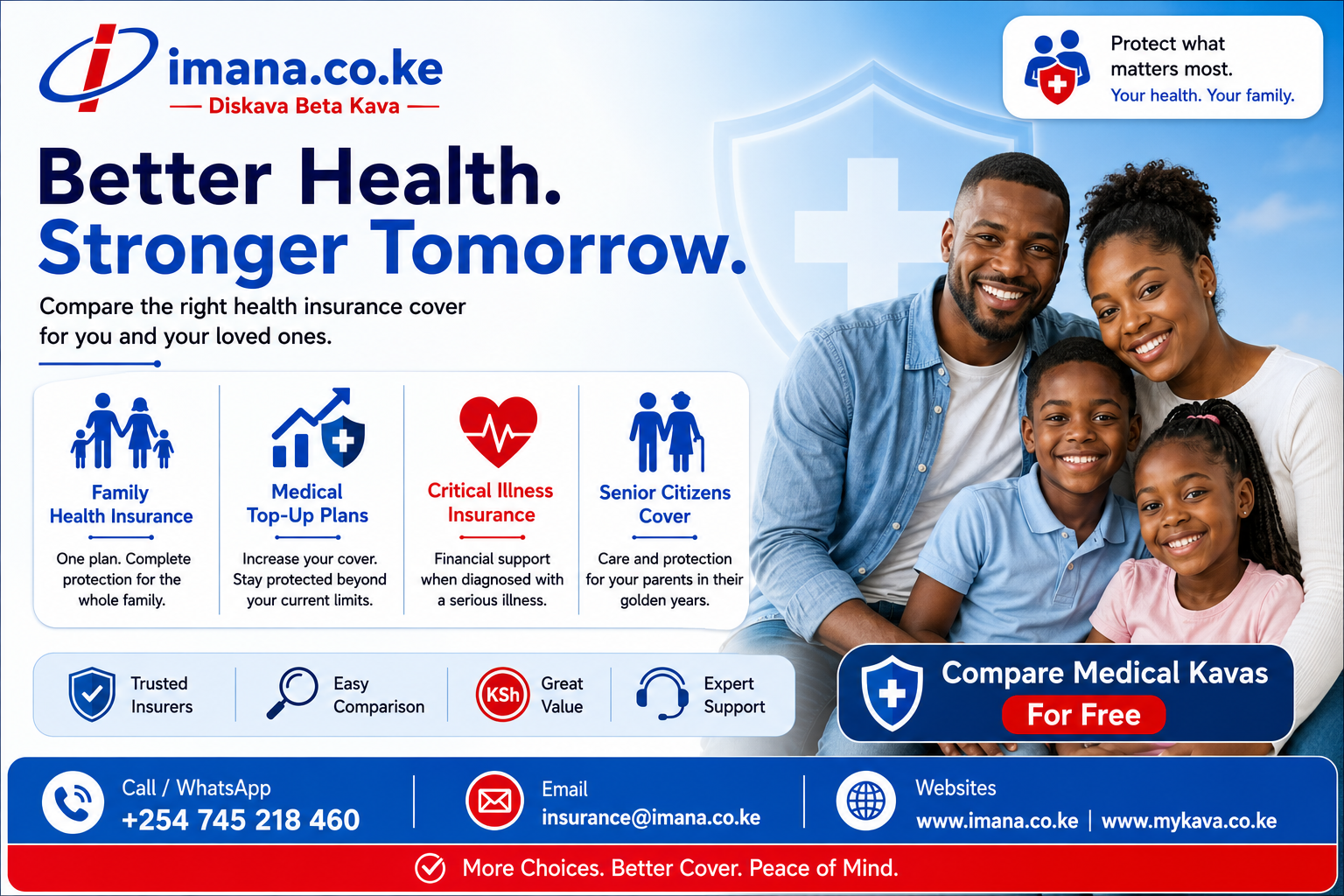
This guide explains some of the most important health insurance solutions available today, including family medical insurance, senior citizens’ cover, critical illness insurance and medical insurance top-up plans.
Why Health Insurance Matters in Kenya
Healthcare costs can rise quickly, especially when treatment involves admission, surgery, specialist consultations, diagnostic tests or long-term medication.
Without adequate medical insurance, families may be forced to:
- Use their emergency savings
- Borrow money
- Sell property or other assets
- Delay treatment
- Depend on relatives and friends
- Interrupt school fees, rent or business expenses
Health insurance does not prevent illness, but it can reduce the financial shock that follows it.
The right medical cover allows you to focus on treatment and recovery instead of worrying about how every hospital bill will be paid.
1. Family Health Insurance in Kenya
A family health insurance plan can cover multiple members of your household under one policy arrangement.
Depending on the insurer and selected plan, a family medical cover may include:
- Inpatient treatment
- Outpatient consultations
- Diagnostic tests
- Prescription medication
- Specialist treatment
- Maternity benefits
- Dental care
- Optical care
- Emergency treatment
- Ambulance services
Some plans use shared family limits, while others provide separate limits for each insured person. It is therefore important to understand how the benefits are structured before purchasing the policy.
Who Can Be Included in a Family Medical Plan?
A family health insurance policy may cover:
- The principal member
- Spouse
- Biological children
- Adopted children
- Other eligible dependants, depending on the insurer
Some providers also offer child-only medical insurance options, making it possible for parents to insure their children separately.
Why Families Should Compare Medical Insurance Plans
The cheapest plan is not always the best plan.
Families should compare:
- Annual premium
- Inpatient limit
- Outpatient limit
- Hospital network
- Waiting periods
- Maternity benefits
- Chronic illness coverage
- Pre-existing condition terms
- Co-payment requirements
- Exclusions
- Emergency benefits
The best policy is one that balances affordability, benefits and access to suitable healthcare providers.
2. Medical Insurance Top-Up Cover
Your existing health insurance may be helpful, but it may not always be enough.
A medical insurance top-up plan provides additional cover when the limit under your primary medical policy is exhausted or insufficient.
For example, a person may already have medical insurance through an employer, association or basic personal plan. However, the inpatient limit may be too low for major treatment.
A top-up policy can help increase the amount of protection available.
Who Needs a Medical Top-Up Plan?
A top-up plan may be suitable for:
- Employees with limited employer medical benefits
- Families whose current inpatient limits are low
- Individuals with basic medical insurance
- People seeking additional protection against major hospital bills
- Parents covering several dependants under one plan
- Individuals concerned about expensive specialist treatment
Benefits of Health Insurance Top-Up Plans
A medical top-up plan may:
- Increase your overall inpatient limit
- Reduce the risk of paying large hospital bills personally
- Strengthen an existing medical policy
- Provide additional peace of mind
- Offer a cost-effective alternative to replacing your entire policy
Before purchasing a top-up plan, confirm the deductible, eligibility conditions, waiting periods and how the plan interacts with your primary health insurance.
3. Critical Illness Insurance in Kenya
Critical illness insurance is different from ordinary medical insurance.
Medical insurance generally pays eligible treatment expenses according to the policy terms. Critical illness insurance may provide a lump-sum benefit after diagnosis of a covered serious illness.
The payment can help the insured person manage financial responsibilities during treatment and recovery.
What Can Critical Illness Insurance Help With?
Depending on the policy structure, the benefit may help with:
- Treatment-related expenses
- Household bills
- Transport to medical appointments
- Rehabilitation
- Income interruption
- Home adjustments
- Caregiver expenses
- Loan repayments
- School fees
- Other family responsibilities
Critical illness insurance may be purchased as a standalone policy or included as an additional benefit under another insurance plan.
Commonly Covered Conditions
The illnesses covered vary from one insurer to another. Policies may include selected conditions such as:
- Cancer
- Stroke
- Heart attack
- Major organ failure
- Coronary artery surgery
- Kidney failure
- Other specified serious illnesses
A diagnosis does not automatically qualify for payment. It must meet the definition and severity requirements stated in the policy document.
That is why reading the policy terms is essential.
4. Health Insurance for Senior Citizens in Kenya
Finding suitable health insurance for senior citizens can be challenging.
As people grow older, healthcare needs may increase, while some insurance providers apply stricter entry ages, higher premiums or additional medical underwriting.
However, senior citizens may still have access to medical insurance options depending on their age, health history and the insurer’s product structure.
What to Consider When Buying Medical Cover for Parents
When comparing senior citizens’ medical insurance, check:
- Maximum entry age
- Renewal age
- Inpatient benefits
- Outpatient benefits
- Chronic illness treatment
- Pre-existing condition terms
- Waiting periods
- Co-payments
- Hospital network
- Annual premium
- Medical examination requirements
- Exclusions
Why Waiting Until Illness Appears Can Be Costly
Many insurance products apply waiting periods or restrictions on conditions that existed before the policy began.
Buying cover earlier can provide more options than waiting until a major diagnosis occurs.
Families should therefore begin comparing suitable plans for ageing parents before the need becomes urgent.
5. Medical Insurance for Workers and Professionals
Every day, workers leave their homes to earn a living, support their families and build their future.
Whether you work in construction, transport, manufacturing, an office, retail, agriculture or another sector, your health remains one of your most important assets.
An illness does not only affect the person receiving treatment. It can also affect:
- Household income
- Business operations
- Rent payments
- Loan repayments
- School fees
- Family responsibilities
Having medical insurance helps workers access healthcare without relying entirely on personal savings.
Employers may also consider group medical insurance for their employees. Group schemes can help businesses attract staff, improve employee welfare and reduce the financial impact of illness on workers.
How to Compare Health Insurance Plans in Kenya
Before buying medical insurance, ask the following questions.
What is the inpatient limit?
This is the maximum amount available for hospital admission and related eligible treatment.
Is outpatient treatment included?
Some plans include outpatient benefits, while others provide inpatient-only cover.
Which hospitals can I use?
Always review the insurer’s approved hospital network.
Are there waiting periods?
Benefits such as maternity, chronic illness treatment and pre-existing conditions may have waiting periods.
Does the policy cover pre-existing conditions?
Some policies exclude them, while others may offer limited cover after a waiting period.
Are dental and optical benefits included?
These may be included, optional or unavailable depending on the plan.
Is the limit shared or per person?
A shared family limit is used collectively, while a per-person plan assigns a separate limit to each member.
What is not covered?
Every insurance policy contains exclusions. Understanding them before purchase can prevent misunderstandings during claims.
Common Mistakes People Make When Buying Medical Insurance
One common mistake is buying a policy based only on price.
A low premium may come with limited benefits, a small hospital network, high co-payments or important exclusions.
Other mistakes include:
- Failing to disclose medical history
- Ignoring waiting periods
- Not checking the hospital panel
- Choosing limits that are too low
- Assuming every illness is covered
- Waiting until someone becomes sick
- Failing to renew the policy on time
- Not asking whether benefits are shared or individual
A proper comparison helps you understand what you are paying for and what the policy is designed to provide.
Why Compare Health Insurance Through Imana and MyKava?
Health insurance products can differ significantly between providers.
At Imana Insurance and MyKava, we help clients compare available medical insurance options based on:
- Premiums
- Eligibility
- Age limits
- Inpatient benefits
- Outpatient benefits
- Hospital networks
- Family structures
- Senior citizen options
- Optional benefits
- Policy exclusions and waiting periods
Our goal is to help you make an informed decision rather than selecting a policy blindly.
Whether you are looking for cover for yourself, your children, your spouse, your employees or your parents, comparing suitable plans is the first step toward better protection.
Imana Wisdom
Health insurance is not simply another annual expense. It is a financial safety net.
The right plan can protect your savings, support your family and make it easier to access treatment when it matters most.
Your current cover may need a top-up. Your family may need a more comprehensive plan. Your parents may require a senior citizens’ medical policy. You may also need critical illness protection beyond ordinary hospital benefits.
The key is not to wait for a medical emergency.
Compare early. Understand the benefits. Choose your Kava wisely.
Compare Medical Kavas for Free
📞 Call/WhatsApp: +254 745 218 460
📧 Email: insurance@imana.co.ke
🌐 Websites: www.imana.co.ke | www.mykava.co.ke
Imana Insurance and MyKava — Diskava Beta Kava.
Health Insurance in Kenya: Family, Senior Citizens, Critical Illness and Top-Up Cover
Compare health insurance in Kenya for families, workers and senior citizens. Learn about medical top-up plans, critical illness cover, benefits, costs and how to choose the right policy.
Health insurance Kenya, medical insurance Kenya, family health insurance Kenya, senior citizens medical insurance Kenya, critical illness insurance Kenya, medical insurance top-up Kenya, affordable health insurance Kenya, MyKava medical insurance, Imana Insurance, compare medical insurance Kenya.