
Blog Details
Diskava. Beta. Kava
31Jul
Understanding Goods in Transit Insurance in Kenya
Learn how Goods in Transit (GIT) Insurance in Kenya protects cargo during transportation. Understand cover, types of policies, who needs it and key points before buying.
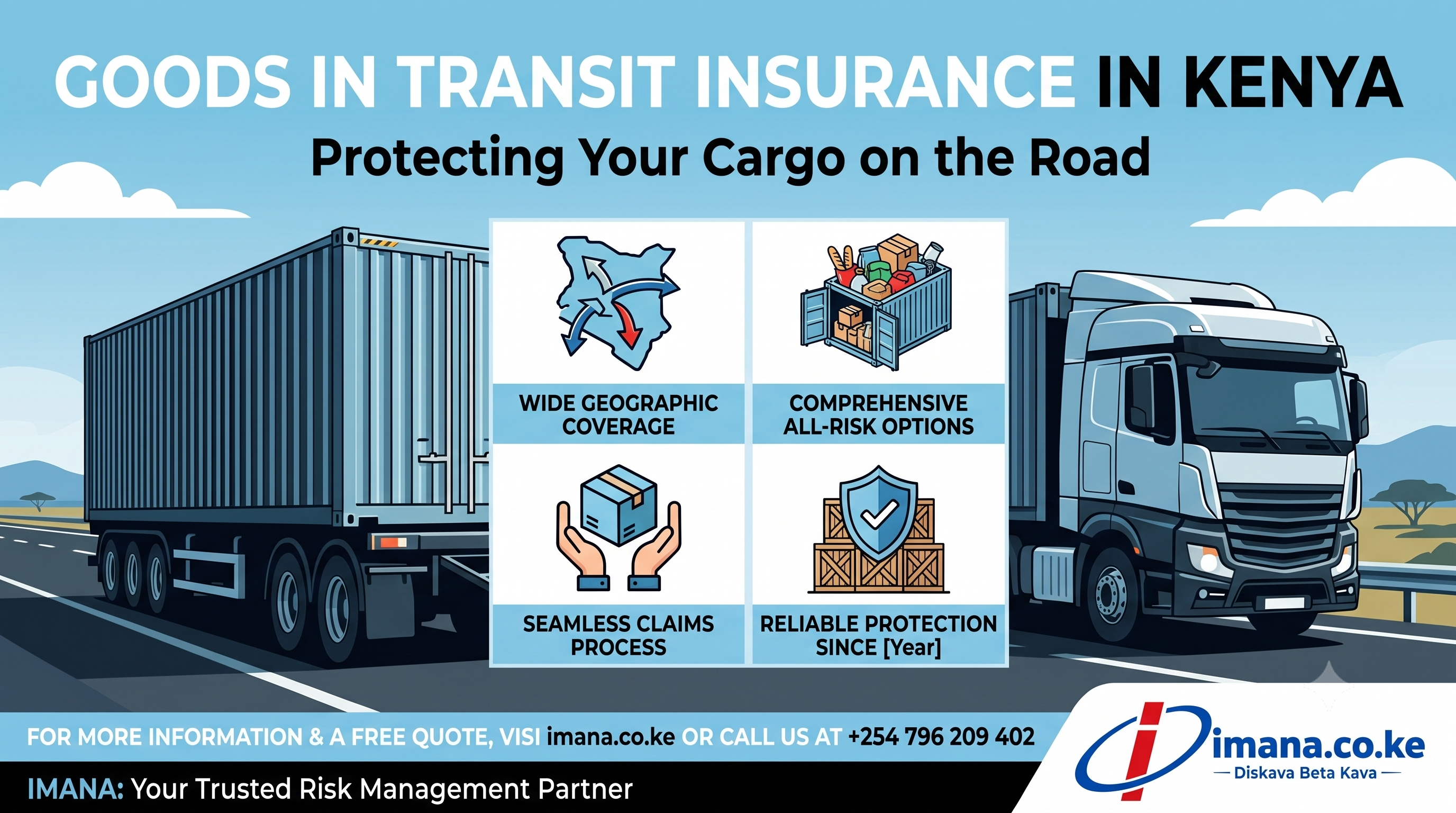
Goods in Transit Insurance in Kenya: Protecting Your Cargo on the Road
By Raymond Momanyi
Founder and CEO, Imana Insurance Agency Kenya Ltd
Every day, goods move across Kenya by road and rail — from factories to warehouses, from distributors to retailers, and from farms to markets. During these journeys, cargo faces real risks: accidents, theft, fire, overturning of vehicles and damage during loading or unloading.
Goods in Transit (GIT) Insurance is designed to protect the value of those goods while they are being transported. It is one of the most practical covers for manufacturers, wholesalers, retailers, transporters and any business that regularly moves stock.
What Is Goods in Transit Insurance?
Goods in Transit Insurance provides cover for loss or damage to goods belonging to you (or for which you are responsible) while they are in transit by road, rail or inland waterway within the geographical limits stated in the policy.
Cover usually begins when the goods are being loaded onto the vehicle and ends when they are unloaded at the final destination. It can also include temporary housing of the goods during the course of transit.
What Does GIT Insurance Typically Cover?
Most policies protect against loss or damage caused by:
- Fire and lightning
- Collision or impact involving the carrying vehicle
- Accidental overturning of the vehicle
- Theft or pilferage (especially following an accident)
- Breakage of bridges
- Derailment (for rail transit)
- Loading and unloading accidents
Some policies are issued on a wider “all risks” basis, while others are limited to specified road or rail risks. The exact scope depends on the wording you select.
Two Main Ways to Arrange Cover
1. Specific (Single Transit) Cover
This is suitable when you have one consignment or a limited number of shipments. Cover is arranged for a particular journey from a named starting point to a named destination.
2. Annual (Open or Declaration) Cover
This is ideal for businesses that move goods regularly throughout the year. You declare an estimated annual carry and a limit for any one consignment. Actual shipments are usually declared periodically, and the premium may be adjusted at the end of the period.
Who Needs Goods in Transit Insurance?
GIT cover is particularly relevant for:
- Manufacturers and distributors moving finished goods or raw materials
- Wholesale and retail businesses
- Logistics and transport companies (especially those carrying clients’ goods)
- Agricultural producers and traders
- Construction material suppliers
- E-commerce and delivery businesses
Note: If you are a professional transporter carrying goods belonging to other people, you may also need Carrier’s Liability cover in addition to (or as part of) your GIT arrangements. A standard motor commercial policy covers the vehicle — it does not automatically cover the cargo.
Important Points to Understand
- Geographical limits — Most Kenyan GIT policies are limited to Kenya unless specifically extended to neighbouring countries.
- Any one carrying limit — This is the maximum the insurer will pay for goods on a single vehicle or consignment. It must be realistic.
- Under-insurance — If you insure goods for less than their true value, the insurer may reduce the claim proportionately.
- Packaging and security — Poor packaging or leaving goods unattended in insecure conditions can affect a claim.
- High-risk or special goods — Electronics, pharmaceuticals, perishables, high-value items or hazardous goods often require special underwriting or higher terms.
- International shipments — GIT is mainly for inland transit. For imports and exports by sea or air, you normally need Marine Cargo Insurance.
Common Exclusions
Typical exclusions include:
- Wear and tear, ordinary leakage or loss in weight
- Insufficient or unsuitable packing
- Inherent vice or nature of the goods
- Delay
- Wilful misconduct
- Certain high-risk categories of goods unless specially agreed
Always read the policy wording carefully.
Final Thoughts
Goods in Transit Insurance is a practical and relatively affordable way to protect the value of cargo while it is on the move. For many businesses, the cost of one serious transit loss can far exceed the annual premium.
At Imana Insurance Agency we help clients arrange suitable GIT cover by comparing options from leading insurers, explaining the limits and conditions clearly, and ensuring the policy matches the nature of the goods and the routes involved.
Need Goods in Transit Insurance for your business?
Contact Imana Insurance Agency Kenya Ltd for a free quotation and clear advice.
Call or WhatsApp: 0796 209 402 | 0113 619 635 | 0745 218 460
Email: insurance@imana.co.ke
Website: www.imana.co.ke
Office: 4th Floor, Krishna Centre, Woodvale Grove, Westlands, Nairobi
Move your goods with greater confidence.
This article provides general information only. Actual cover, limits, excesses, geographical scope and exclusions depend on the specific insurer and policy selected. Always obtain a current quotation and full policy wording before purchasing.