
Blog Details
Diskava. Beta. Kava
16Jun
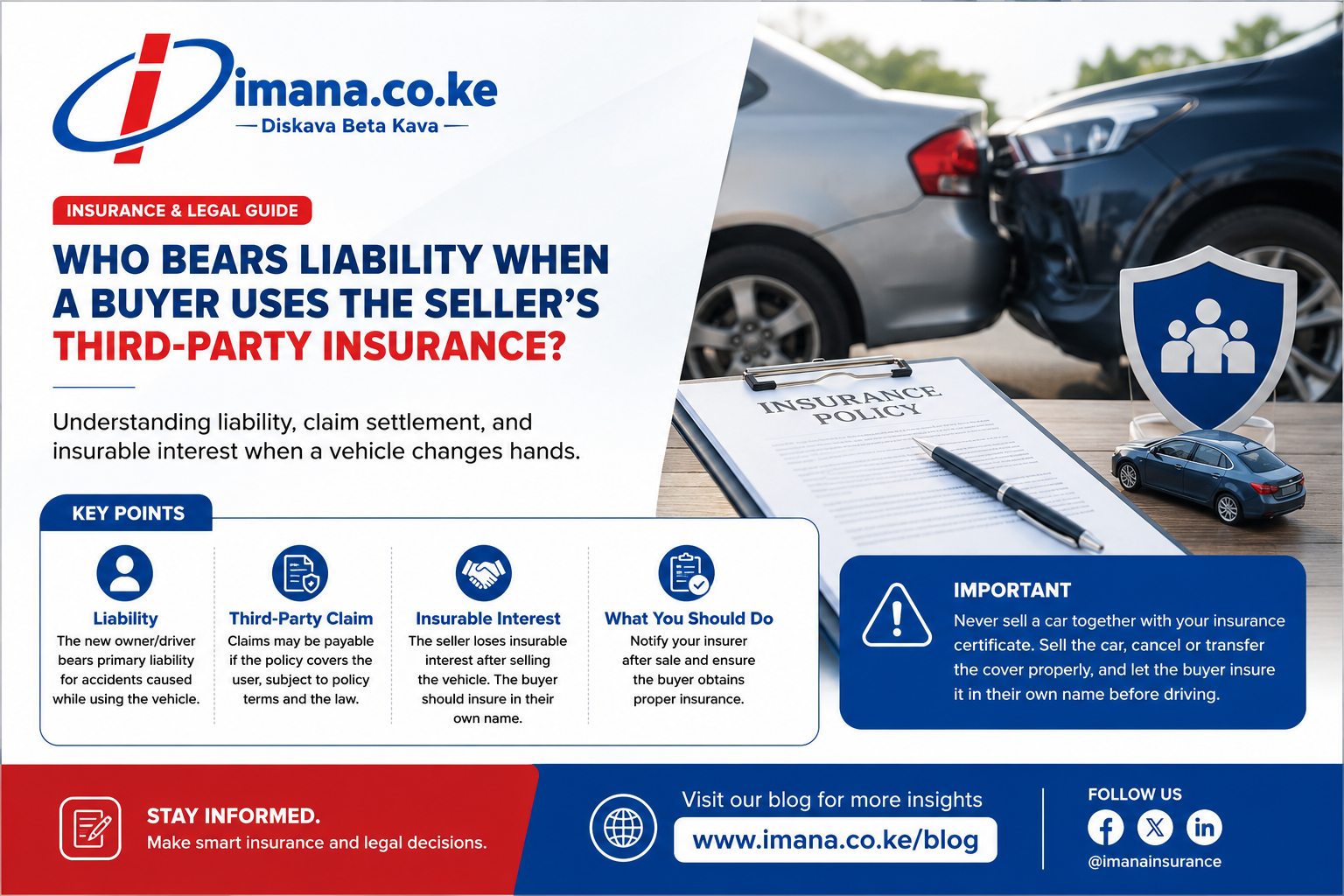
Who Bears Liability When a Buyer Uses the Seller’s Third-Party Motor Insurance?
You have a third-party insurance cover on your car. In the fourth month of the policy, you sell the car, but the new owner continues using your existing insurance cover without taking out a new policy in their own name.
The new owner is later involved in an accident where the insured vehicle is found to be at fault, causing damage to another vehicle and the death of that vehicle’s driver.
In this situation, who bears liability: the new owner or the previous owner?
Is the third-party claim payable by the insurer?
How does the principle of insurable interest apply once the vehicle has been sold?
Liability primarily falls on the new owner/user/driver, because they are the person using, controlling, and benefiting from the vehicle at the time of the accident.
But the painful part is this:
The previous owner may still be dragged into the claim if the vehicle was still registered in their name, the policy was still in their name, or the sale/transfer was not properly documented. In practice, the injured third party or the deceased driver’s family may sue the driver, current user, registered owner, beneficial owner, and insurer together, then the court sorts liability.
Is the third-party claim payable?
Possibly yes, but not automatically.
Under Kenya’s Insurance (Motor Vehicles Third Party Risks) Act, a motor vehicle used on a road must have a valid third-party policy in relation to the user of that vehicle. The Act requires insurance for third-party death or bodily injury arising from the use of the vehicle on a road.
The insurer’s liability is strongest where the judgment is against a person insured by the policy. The Act says that where a valid policy exists and judgment is obtained against a person insured by that policy, the insurer may be required to satisfy the judgment, subject to the Act’s conditions and limits.
So the key question becomes:
Was the new owner an insured person under the old policy?
Most private motor policies cover the policyholder and may cover permitted drivers, but they usually do not automatically transfer the policy to a purchaser just because the car was sold. A policy is a contract between the insurer and the named insured. Once the previous owner sells the car, the buyer should obtain their own insurance or arrange a formal transfer/endorsement with the insurer.
How insurable interest applies
Insurable interest means you must have a legal or financial stake in the subject matter of insurance.
When the previous owner sold the car, they generally stopped having insurable interest in that vehicle. They no longer own it, control it, or suffer direct financial loss if it is damaged. For own-damage/comprehensive claims, that would be a serious problem: the previous owner cannot claim for a car they no longer own.
For third-party liability, it is slightly different. Third-party insurance is not primarily about the car’s damage. It is about liability arising from the use of the vehicle. But still, the person claiming protection under the policy must fall within the persons covered by the policy.
So:
Previous owner: had insurable interest when buying the policy, but likely lost it after sale.
New owner: has insurable interest after purchase, but may not have a contract with the insurer unless the policy was transferred or endorsed.
Third party/deceased driver’s estate: has a claim against the person legally liable for the accident.
Who bears liability?
1. New owner / driver
They bear primary liability if they caused the accident. They were using the vehicle and created the risk.
2. Previous owner
They may be exposed if:
The logbook was still in their name.
The transfer had not been completed.
They allowed the buyer to continue using their insurance certificate.
They did not notify the insurer of the sale.
There is no clear sale agreement or delivery note proving the vehicle had changed hands.
Even if the previous owner can later defend themselves by proving the sale, they may still be pulled into the matter because documents still point to them.
3. Insurer
The insurer may pay the third-party claim if the claim falls within the statutory third-party cover and the person liable is treated as insured under the policy. But the insurer may dispute liability if the vehicle had been sold and the new owner was not disclosed, not endorsed, and not covered.
Also, under Cap. 405, the insurer can have statutory obligations in certain third-party judgments, but the Act also gives insurers grounds to resist payment in some circumstances, including issues around cancellation, notice, fraud, or policy avoidance due to material non-disclosure.
Damage to the other car vs death of the driver
This distinction matters.
Death or bodily injury: This is the core statutory third-party risk under Cap. 405. The law specifically deals with liability for death or bodily injury caused by use of the vehicle on a road.
Damage to the other car: This depends more heavily on the policy wording. Many third-party motor policies include third-party property damage, but the statutory compulsory element is mainly death and bodily injury. So, property damage may be payable if covered by the policy terms.
Practical claims position
In real claims handling, the insurer will likely ask for:
- Sale agreement
- Logbook/NTSA transfer status
- Date of sale
- Date of accident
- Whether insurer was notified
- Whether the certificate was transferred or cancelled
- Who was driving – as per police abstract
- Demand letter / court pleadings
- Policy schedule and certificate wording
If the previous owner sold the car in month 4 and simply let the buyer continue using the old certificate, that is risky. The insurer may say:
“We insured the previous owner, not the new owner. The risk changed without disclosure.”
The third party may still pursue compensation, but the insurer may defend or later seek recovery depending on the facts and policy wording.
Best position
The safer legal and insurance position is:
Once a vehicle is sold, the seller should immediately notify the insurer and cancel or transfer the policy if the insurer allows it. The buyer should not continue using the seller’s cover casually. The buyer should buy fresh insurance in their own name immediately.
For your scenario, my view is:
The new owner/driver bears primary liability. The previous owner may be joined if records still show them as owner or policyholder. The third-party injury/death claim may be payable depending on whether the new owner/driver is treated as covered under the policy, but the insurer has room to dispute because ownership and insurable interest had changed without proper endorsement.
“Sell the car. Don’t sell your insurance risk.”
Selling your car? Don’t hand over your insurance cover with it. Talk to Imana Insurance today and let us guide you on proper policy cancellation, transfer, or fresh cover for the new owner.
Call/WhatsApp: +254 113 806 810 | +254 103 806 588 | +254 745 218 460
Website: www.imana.co.ke | www.mykava.co.ke