
Blog Details
Diskava. Beta. Kava
01Aug
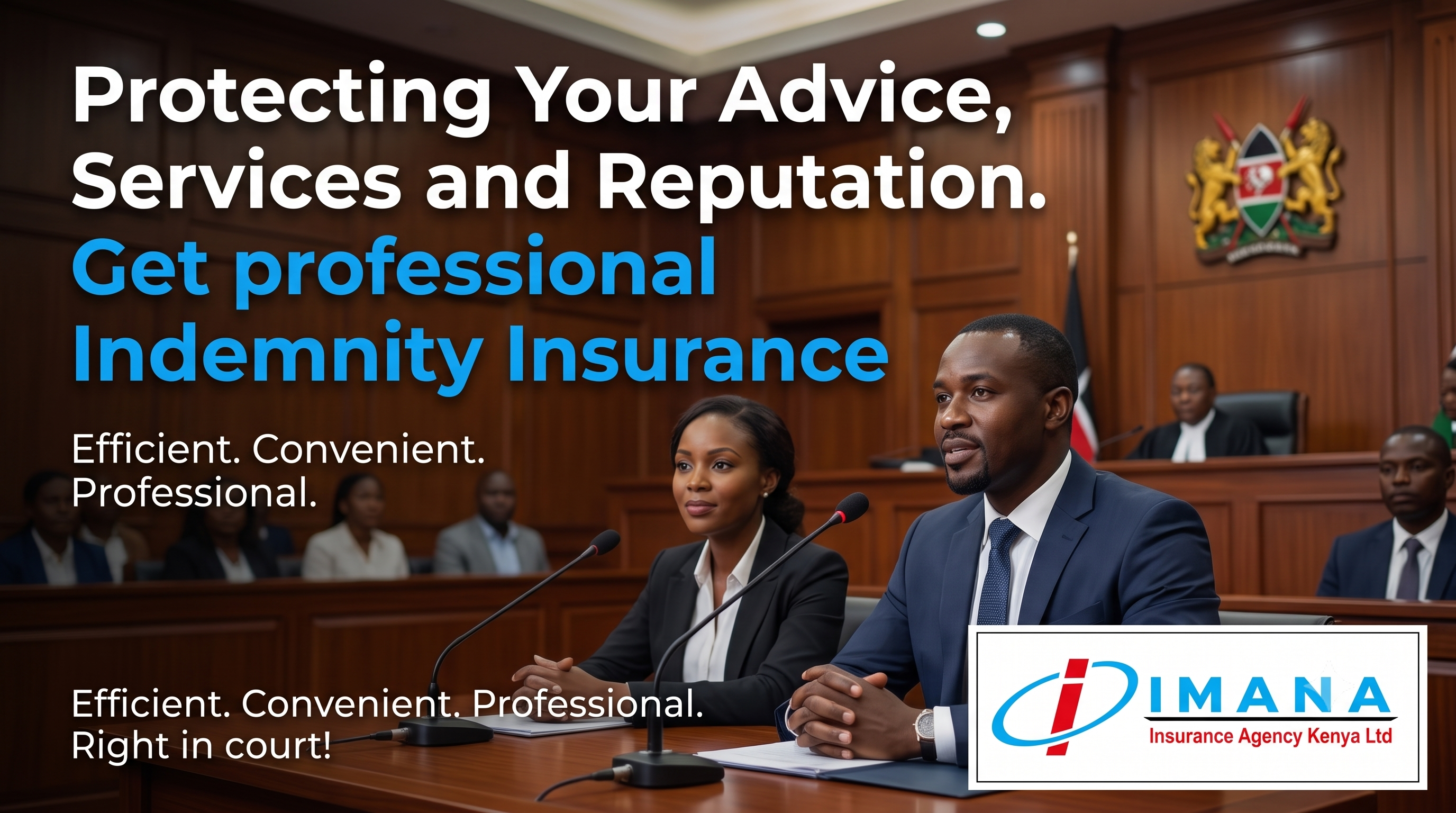
Professional Indemnity Insurance for Consultants in Kenya
Learn how Professional Indemnity Insurance protects consultants in Kenya against claims arising from negligent advice, errors, omissions, misrepresentation and professional-service failures.
Can a Client Sue a Consultant for Giving the Wrong Advice?
Consultants are paid for their expertise, professional judgment and ability to solve problems.
A client may rely on a consultant’s:
- Advice
- Report
- Design
- Recommendation
- Analysis
- Calculation
- Strategy
- Inspection
- Certification
- Project supervision
- Professional opinion
When an alleged mistake causes the client financial loss, project delay or additional expense, the consultant may face a compensation demand.
The consultant may believe that the work was performed correctly. However, defending that position can still require lawyers, expert witnesses, documents and significant management time.
Professional Indemnity Insurance, commonly abbreviated as PI Insurance, is designed to protect professionals and consulting businesses against eligible legal liabilities arising from errors, omissions, negligent advice or failures in the provision of professional services.
Britam describes Professional Indemnity Insurance as liability protection against claims arising from negligence, error or omission when rendering—or failing to render—professional services. CIC similarly identifies errors, omissions, misrepresentation, negligent advice and malpractice as common professional-indemnity exposures.
A consultant may deliver hundreds of successful assignments, but one disputed report or recommendation can create a substantial legal and financial claim.
What Is Professional Indemnity Insurance?
Professional Indemnity Insurance protects a consultant or professional firm against specified claims alleging that a professional service caused a client financial loss.
It is also known as:
- Professional Liability Insurance
- Errors and Omissions Insurance
- E&O Insurance
- Malpractice Insurance in some professions
Depending on the selected policy, it may respond to claims alleging:
- Professional negligence
- Errors
- Omissions
- Incorrect advice
- Misrepresentation
- Failure to perform professional duties
- Breach of professional duty
- Loss of documents
- Defamation connected to professional services
- Breach of confidentiality
- Intellectual-property infringement
- Dishonesty by employees
- Failure to meet a professional standard
Not every benefit is automatically included. Some require specific extensions.
The quotation, policy schedule and full wording determine the actual protection.
Why Consultants Need Professional Indemnity Insurance
Consultants frequently work with information rather than physical products.
A seemingly small professional mistake may influence a client’s:
- Investment decision
- Construction project
- Financial reporting
- Recruitment
- Technology system
- Marketing campaign
- Legal position
- Risk-management strategy
- Property purchase
- Business expansion
A client may allege that the consultant:
- Gave incorrect advice
- Failed to identify a risk
- Missed an important deadline
- Produced an inaccurate report
- Used incorrect data
- Failed to follow instructions
- Recommended an unsuitable solution
- Did not meet accepted professional standards
Even where the allegation is unfounded, the consultant may need legal representation.
Professional Indemnity Insurance helps protect both the consultant’s finances and the continuity of the consulting business.
Who Should Consider Professional Indemnity Insurance?
PI Insurance can be relevant to any person or organisation providing specialist advice or services.
Management Consultants
Management consultants may advise clients on:
- Strategy
- Operations
- Organisational restructuring
- Performance improvement
- Governance
- Business processes
A client may claim that an unsuccessful restructuring or recommendation caused financial loss.
Information Technology Consultants
IT consultants may be responsible for:
- Software implementation
- System integration
- Cybersecurity advice
- Data migration
- Cloud services
- Network design
- Technology procurement
Potential claims may arise from:
- Failed implementation
- Data loss
- System downtime
- Security weaknesses
- Missed project requirements
- Incompatible software
Cyber Insurance may also be necessary because Professional Indemnity Insurance may not fully address data breaches, ransomware or network interruption.
Financial and Business Consultants
These consultants may provide:
- Financial projections
- Investment analysis
- Business plans
- Feasibility studies
- Transaction support
- Internal-control advice
A client may allege that incorrect figures or assumptions caused an unsuitable business decision.
Accountants and Auditors
Accountants and auditors may face claims involving:
- Incorrect financial statements
- Tax-related errors
- Missed filing deadlines
- Inadequate auditing
- Payroll mistakes
- Failure to identify irregularities
The insurance programme should reflect the precise services performed.
Architects, Engineers and Quantity Surveyors
Construction professionals may face claims involving:
- Design errors
- Incorrect specifications
- Cost overruns
- Structural problems
- Project delays
- Inadequate supervision
- Certification errors
Some contracts or professional regulations may require an appropriate level of Professional Indemnity Insurance. For example, Kenya’s REIT regulations require certain project-manager certifiers to maintain appropriate Professional Indemnity Insurance.
Lawyers and Legal Consultants
Kenya’s Advocates Professional Indemnity Regulations make compliance with prescribed professional-indemnity requirements a condition for advocates covered by the regulations to receive practising certificates. The cover is intended to compensate clients for specified civil liability or breach-of-trust losses involving an advocate or employees.
Medical Professionals and Healthcare Consultants
Doctors, dentists, pharmacists and other medical professionals can face malpractice allegations arising from professional treatment or advice.
Medical Malpractice Insurance is a specialised form of Professional Indemnity cover and should be arranged using wording appropriate to the healthcare profession.
Insurance Brokers and Medical Insurance Providers
Kenya’s Insurance Regulations prescribe Professional Indemnity Insurance requirements for insurance brokers and medical insurance providers. IRA’s current broker-licensing guidance states that brokers require a Professional Indemnity policy with a minimum limit of KSh 10 million for licensing purposes. (Insurance Regulatory Authority)
Human-Resource Consultants
HR consultants may face allegations involving:
- Recruitment errors
- Inadequate background checks
- Incorrect employment advice
- Mishandling confidential records
- Poorly designed policies
Marketing and Communications Consultants
Potential claims may arise from:
- Publication of misleading content
- Copyright infringement
- Defamation
- Brand damage
- Failure to meet campaign obligations
- Unauthorised use of images or information
Property Consultants and Valuers
Claims may involve:
- Incorrect valuation
- Inaccurate property advice
- Failure to identify important defects
- Negligent reporting
- Reliance on incorrect market information
Training and Education Consultants
A consultant developing professional curricula, certification programmes or organisational training may face claims that the material was inaccurate, unsuitable or failed to meet contracted standards.
Environmental and Safety Consultants
These consultants may advise on:
- Environmental impact
- Workplace safety
- Regulatory compliance
- Hazard management
- Waste handling
An alleged failure to identify a major risk may lead to costly claims.
What Can Professional Indemnity Insurance Cover?
The available protection varies, but a typical policy may include the following.
1. Negligent Professional Advice
The policy may respond when a client alleges that the consultant failed to exercise the expected degree of professional care.
Example
A business consultant recommends a system based on incorrect analysis. The client alleges that implementing the recommendation caused a significant financial loss.
The policy may meet eligible defence and settlement costs, subject to its terms.
2. Errors and Omissions
An error is something the consultant did incorrectly.
An omission is something the consultant allegedly failed to do.
Examples include:
- Incorrect calculation
- Missing information from a report
- Failure to identify an important risk
- Sending the wrong specifications
- Omitting a required process
- Failing to submit advice by an agreed deadline
3. Misrepresentation
A client may claim that information presented by the consultant was inaccurate or misleading.
The policy may respond where the misrepresentation was innocent or negligent.
Deliberate dishonesty or fraud by the insured is ordinarily excluded.
4. Legal Defence Costs
A consultant can incur substantial expenses defending an allegation even when no negligence is eventually proved.
Eligible defence costs may include:
- Advocates’ fees
- Court expenses
- Expert-witness fees
- Investigation expenses
- Other approved professional costs
The insurer normally requires prompt notification and control or approval of the legal defence.
5. Settlements and Court Awards
Where the consultant is found legally liable—or the insurer approves a negotiated settlement—the policy may pay eligible compensation up to the applicable limit.
6. Loss of Documents
Some policies may cover liability or restoration costs where important client documents are:
- Lost
- Damaged
- Destroyed
- Misplaced
The extension may cover physical and electronic documents, depending on the wording.
7. Breach of Confidentiality
Consultants often handle commercially sensitive information.
An extension may address eligible claims arising from negligent disclosure of client information.
Cyber and privacy risks should still be reviewed separately.
8. Defamation
A consultant may face a claim alleging libel or slander arising from a report, presentation or professional communication.
Defamation protection is not automatically included in every PI policy.
9. Intellectual-Property Infringement
Some policies may cover unintentional infringement involving:
- Copyright
- Designs
- Other intellectual property
Patent or deliberate infringement may be excluded.
10. Employee Dishonesty
A policy may be extended to cover the firm’s liability arising from dishonest acts committed by employees.
This should not be confused with Fidelity Guarantee Insurance, which protects against direct financial loss suffered by the employer because of employee dishonesty.
Practical Professional Indemnity Claim Examples
Incorrect Feasibility Study
A consultant prepares a feasibility report for a proposed business project.
The client invests based on the report but later alleges that major expenses and regulatory requirements were omitted.
The client demands compensation for the resulting financial loss.
Faulty Engineering Design
An engineer provides specifications that allegedly require substantial corrective work during construction.
The client claims:
- Redesign costs
- Additional construction expenses
- Project delays
- Professional fees
Failed Software Implementation
An IT consultant installs a business system that does not perform the agreed functions.
The client alleges:
- Business interruption
- Data migration costs
- Replacement-system expenses
- Lost revenue
Incorrect Property Valuation
A client relies on a valuation when purchasing or financing property.
The client later alleges that the asset was materially overvalued and demands compensation from the valuer.
Missed Professional Deadline
A consultant fails to submit an application, report or document before a critical deadline.
The client alleges that the missed deadline caused:
- Loss of a tender
- Penalties
- Additional costs
- Loss of a commercial opportunity
Breach of Confidentiality
A consultant accidentally sends confidential client information to the wrong recipient.
The client alleges reputational and financial damage.
Cyber or privacy protection may also be relevant.
Professional Indemnity vs Public Liability Insurance
These policies address different exposures.
Professional Indemnity Insurance
Protects against claims arising from professional advice or services.
Example
An architect produces an allegedly defective design.
Public Liability Insurance
Protects against eligible accidental bodily injury or property damage involving third parties.
Example
A client slips on a wet floor in the consultant’s office.
A consultant may require both policies.
Professional Indemnity vs Cyber Insurance
Professional Indemnity may address allegations involving negligent technology advice or professional-service failure.
Cyber Insurance may address:
- Data breaches
- Ransomware
- Privacy liability
- Cyber Business Interruption
- Forensic investigation
- Customer notification
- Network-security failure
An IT consultant may need both PI and Cyber Insurance because a single incident can create professional negligence, privacy and technology-interruption claims.
Professional Indemnity vs Directors and Officers Insurance
Professional Indemnity
Protects the business against claims arising from professional services.
Directors and Officers Liability
Protects directors and officers against eligible claims alleging wrongful management acts.
A consulting firm’s client may bring a PI claim about advice. A shareholder or regulator may bring a D&O claim about a management decision.
Professional Indemnity vs Fidelity Guarantee
Professional Indemnity
Protects against third-party claims alleging professional error or negligence.
Fidelity Guarantee
Protects the business against direct financial losses caused by dishonest employees.
Both may be relevant where employees handle client work, money or sensitive information.
Is Professional Indemnity Insurance Compulsory in Kenya?
It is not compulsory for every consultant.
However, it may be required by:
- Professional regulations
- Licensing authorities
- Client contracts
- Tender documents
- Government projects
- Banks
- International organisations
- Professional associations
- Principal contractors
Professional Indemnity requirements already apply in specific Kenyan sectors. Advocates covered by the relevant regulations must meet PI requirements for practising certificates, while insurance brokers must maintain prescribed cover for licensing. (Insurance Regulatory Authority)
Even where it is not legally compulsory, a consultant may be unable to win certain contracts without providing evidence of cover.
What Does “Claims-Made Basis” Mean?
Professional Indemnity Insurance commonly operates on a claims-made basis.
This means the relevant policy is generally the one active when the claim is first made and reported—not necessarily the policy that was active when the professional work was performed.
For cover to respond, the policy may require that:
- The claim is made during the active policy period
- The insurer is notified within the permitted period
- The professional work occurred after the retroactive date
- The insured did not know about the circumstances before cover began
This makes continuous renewal extremely important.
Example
A consultant completes a project in 2024.
A client discovers an alleged error and makes a claim in 2026.
The 2026 PI policy may need to respond, provided:
- The policy is active
- The retroactive date includes the 2024 work
- The consultant was not previously aware of the problem
- The claim falls within the wording
Allowing the policy to lapse can expose the consultant to claims arising from earlier assignments.
What Is a Retroactive Date?
The retroactive date is the earliest date from which professional work can be considered under the policy.
Possible arrangements include:
- Policy inception date
- Date the consulting business began
- A specifically agreed earlier date
- Unlimited retroactive protection
A claim involving work performed before the retroactive date may not be covered.
Consultants changing insurers should protect their existing retroactive date whenever possible.
What Is Run-Off Cover?
Run-off cover protects against claims made after a consultant:
- Retires
- Sells the business
- Closes the practice
- Merges with another firm
- Stops providing a professional service
A claim may be made years after the original assignment.
Run-off cover keeps protection available for earlier professional work during an agreed period.
Closing the business does not prevent a former client from alleging that past advice caused a loss.
What Is the Limit of Indemnity?
The limit of indemnity is the maximum amount the insurer can pay, subject to the policy.
It may be structured as:
- Any one claim
- Annual aggregate
- Any one claim and in the aggregate
- A combined limit including defence costs
- A limit with defence costs paid separately
Possible limits may range from modest amounts for small consultants to hundreds of millions of shillings for major professional firms and projects.
The appropriate limit depends on:
- Size of contracts
- Potential client loss
- Regulatory requirements
- Type of professional service
- Number of clients
- Project duration
- Territorial exposure
- Contractual requirements
A consultant handling a KSh 500 million project may require a different limit from one providing advice to small local businesses.
Are Defence Costs Included Within the Limit?
This varies.
Costs included within the limit
Legal and investigation costs reduce the amount remaining for settlement.
Costs paid in addition
Defence costs may be payable separately from the indemnity limit, subject to the policy.
This distinction can be important.
A policy with a KSh 10 million limit may provide significantly less compensation capacity where KSh 4 million of defence costs is deducted from the same limit.
What Is the Policy Excess?
The excess is the portion of an eligible claim that the consultant or firm must contribute.
It may apply:
- Per claim
- To damages only
- To defence costs and damages
- At different levels for different activities
- At a higher level for claims in certain countries
Compare the excess with the firm’s ability to pay.
A policy with a low premium but an unaffordable excess may provide limited practical protection.
Common Professional Indemnity Exclusions
Depending on the insurer, exclusions may include:
- Deliberate or dishonest acts by senior management
- Known circumstances before policy inception
- Claims arising before the retroactive date
- Bodily injury or property damage better covered elsewhere
- Contractual guarantees beyond ordinary professional liability
- Fines and penalties
- War
- Insolvency
- Employment disputes
- Cyber incidents
- Patent infringement
- Claims between related entities
- Work performed outside the territorial limits
- Services not declared to the insurer
- Claims notified outside the permitted period
The exclusions should be reviewed against the consultant’s actual work.
Contractual Liability and Professional Indemnity
Consultants should be careful when signing contracts that:
- Guarantee a specific result
- Accept unlimited liability
- Waive normal legal defences
- Include broad indemnity clauses
- Impose severe penalties
- Require insurance beyond available cover
- Extend responsibility to subcontractors
- Use foreign law or jurisdiction
Professional Indemnity Insurance may cover the consultant’s ordinary legal liability but exclude obligations assumed solely because of a contract.
A contract should ideally be reviewed before signing, especially where the client requires a high PI limit.
Does PI Insurance Cover Poor Workmanship?
Professional Indemnity Insurance protects professional advice and service exposures.
It may not cover the cost of correcting defective physical workmanship performed by the insured.
For example:
- An engineer’s defective design may create a PI exposure.
- Poor physical construction may fall under Contractors All Risks, Public Liability or another construction policy.
- Replacement of the consultant’s own defective work may be excluded.
The distinction depends on the professional service and wording.
Does Professional Indemnity Cover Contract Disputes?
Not every unpaid invoice or disagreement is a PI claim.
Ordinary commercial disputes may involve:
- Unpaid professional fees
- Scope disagreements
- Termination
- Delay not caused by negligence
- Failure by the client
- Contract interpretation
A PI policy generally responds when the dispute includes an eligible allegation of professional negligence or another covered wrongful act.
What Is a Circumstance That May Give Rise to a Claim?
A consultant should notify the insurer not only after receiving a formal lawsuit but also when becoming aware of circumstances that could reasonably lead to a claim.
Examples include:
- Client alleging that the advice was wrong
- Threat of legal action
- Discovery of a serious report error
- Client refusing payment because of alleged negligence
- Formal complaint to a professional body
- Demand to correct work at substantial cost
- Awareness that confidential data was sent incorrectly
Early notification allows the insurer to help manage the problem.
Failure to report a known circumstance can affect later cover.
What Should a Consultant Do After Receiving a Complaint?
1. Notify the insurer immediately
Send the complaint, demand letter or court documents without delay.
2. Do not admit liability
Avoid promising compensation or accepting fault before the insurer assesses the matter.
3. Preserve the complete file
Keep:
- Contract
- Proposal
- Scope of work
- Reports
- Emails
- Meeting notes
- Calculations
- Data supplied by the client
- Version history
- Invoices
- Project records
4. Do not alter records
Do not rewrite reports, delete emails or change file dates after the complaint.
5. Follow the insurer’s instructions
The insurer may appoint:
- Lawyer
- Loss adjuster
- Investigator
- Technical expert
- Mediator
6. Continue managing the client relationship carefully
A professional response may prevent a complaint from escalating, but all settlement discussions should be coordinated with the insurer.
Documents Required for a PI Claim
The insurer may request:
- Completed claim form
- Policy schedule
- Client contract
- Terms of engagement
- Proposal or tender
- Professional report
- Client instructions
- Correspondence
- Meeting notes
- Demand letter
- Court documents
- Expert reports
- Invoice records
- Employee statements
- Details of subcontractors
- Timeline of events
- Previous complaints or claims
Accurate project records can make the difference between a manageable defence and an unsupported account.
How Much Does Professional Indemnity Insurance Cost in Kenya?
There is no universal premium.
The price may depend on:
- Profession
- Annual professional fees or turnover
- Years of experience
- Number of employees
- Claims history
- Required indemnity limit
- Nature of services
- Largest contract
- Client industries
- Territorial scope
- Work in the United States or Canada
- Subcontractor use
- Retroactive cover
- Policy excess
Higher-risk professions or firms handling large projects may pay more than consultants with low-value advisory assignments.
A current quotation is necessary.
Information Required for a PI Quotation
A consultant may need to provide:
Business details
- Registered business name
- KRA PIN
- Year established
- Professional qualifications
- Number of directors and employees
- Annual revenue or professional fees
Service information
- Detailed description of services
- Percentage of income from each service
- Largest project
- Typical contract value
- Client types
- Subcontracted work
- Countries served
Risk information
- Previous claims
- Known circumstances
- Contract-review process
- Quality-control procedures
- Client approval process
- Record-keeping
- Professional registrations
- Required policy limit
Do not use a broad description such as “consultancy” without explaining the actual work.
An IT consultant, engineering consultant and human-resource consultant present different risks.
How Consultants Can Reduce Professional Liability Risks
Use written engagement letters
Every assignment should clearly state:
- Scope of work
- Deliverables
- Fees
- Timelines
- Client responsibilities
- Assumptions
- Limitations
- Dispute-resolution procedure
Avoid promising guaranteed results
Professional services often depend on information and decisions outside the consultant’s control.
Record client instructions
Confirm important verbal instructions by email.
Use quality-control procedures
Require peer review for:
- Important reports
- Calculations
- Designs
- Recommendations
- Financial projections
Maintain professional competence
Keep qualifications, licences and continuing professional development current.
Protect confidential information
Use secure access, encryption, strong passwords and suitable data-handling policies.
Control subcontractors
Confirm that subcontractors:
- Are qualified
- Have appropriate insurance
- Use written agreements
- Follow quality standards
Retain records
Keep project records for an appropriate period because claims may arise years later.
Notify problems early
Early insurer involvement can prevent a manageable issue from becoming a major lawsuit.
Common Mistakes Consultants Make
Assuming a limited company removes personal or business liability
Incorporation does not prevent the company from facing a professional-negligence claim.
Buying only Public Liability Insurance
Public Liability does not ordinarily cover financial loss caused by negligent professional advice.
Allowing PI cover to lapse
Claims-made cover normally requires an active policy when a claim is made.
Losing the retroactive date
Changing insurers without preserving prior-acts protection can create a gap.
Giving vague information during quotation
Undeclared services may fall outside the policy.
Signing unlimited liability contracts
The contract may expose the consultant beyond the insurance limit.
Reporting complaints late
Waiting for a lawsuit may be too late where the consultant already knew of the potential claim.
Assuming every legal expense is covered
The claim must relate to an insured professional liability, and legal expenses normally require insurer approval.
How to Compare Professional Indemnity Quotations
Ensure each insurer receives the same:
- Service description
- Annual professional fees
- Claims history
- Required limit
- Territorial scope
- Retroactive date
- Contract profile
Then compare:
- Premium
- Limit per claim
- Annual aggregate
- Defence-cost treatment
- Policy excess
- Retroactive date
- Run-off options
- Loss-of-documents cover
- Confidentiality protection
- Defamation
- Intellectual-property terms
- Employee dishonesty
- Subcontractor protection
- Territorial and jurisdictional limits
- Claims-notification requirements
- Exclusions
The cheapest PI quotation may contain:
- Narrower service descriptions
- A higher excess
- Lower defence-cost protection
- No retroactive cover
- Restricted jurisdiction
- More exclusions
How Imana Helps Consultants Arrange Professional Indemnity Insurance
Imana Insurance Agency Kenya Ltd helps consultants, professional practices and businesses compare Professional Indemnity quotations from suitable licensed insurers.
The process may include:
- Understanding the consultant’s services.
- Reviewing professional qualifications and experience.
- Identifying high-value contracts and client exposures.
- Selecting an appropriate indemnity limit.
- Reviewing retroactive-date requirements.
- Comparing premiums, excesses and extensions.
- Explaining claims-made conditions.
- Coordinating policy issuance.
- Supporting renewals and policy amendments.
- Guiding the consultant during claim notification.
Related business covers can include:
- Public Liability
- Cyber Insurance
- Directors and Officers Liability
- Fidelity Guarantee
- WIBA
- Group Personal Accident
- Property Insurance
- Business Interruption
- Electronic Equipment
- Group Medical
Insurance business should be placed through licensed insurers and intermediaries. The Insurance Regulatory Authority regulates and supervises Kenya’s insurance industry and publishes licensing information. (IRA - Kenya)
Professional Indemnity Insurance in Nairobi and Across Kenya
Imana Insurance Agency Kenya Ltd
4th Floor, Krishna Centre
Woodvale Grove, Westlands
Nairobi, Kenya
Imana supports consultants and professional firms in:
- Westlands
- Nairobi CBD
- Upper Hill
- Parklands
- Riverside
- Kilimani
- Gigiri
- Industrial Area
- Other parts of Kenya through digital channels
Website: www.imana.co.ke
Call or WhatsApp: +254 796 209 402
Compare quotations. Understand the professional risks. Choose suitable protection. Let Imana handle the rest.
Frequently Asked Questions
What is Professional Indemnity Insurance?
It is liability insurance protecting professionals against eligible claims arising from errors, omissions, negligent advice or failure to provide professional services. (Britam)
Is Professional Indemnity Insurance compulsory in Kenya?
Not for every consultant. It is compulsory or required in certain regulated professions, licensing processes, contracts and tenders.
Does PI cover incorrect advice?
It may cover eligible claims alleging that negligent or incorrect professional advice caused a client financial loss.
Does PI cover legal defence costs?
Normally, approved legal defence costs can be included, but the policy should show whether they are within or additional to the indemnity limit.
What is a claims-made policy?
It generally responds when a claim is first made and notified during the active policy period, subject to the retroactive date and other conditions.
What is a retroactive date?
It is the earliest date from which professional work can qualify for consideration under the policy.
Should a consultant maintain cover after retirement?
Run-off cover may be necessary because claims involving past work can arise after the consultant has stopped practising.
Does Public Liability replace PI?
No. Public Liability mainly concerns third-party injury and property damage. PI concerns professional advice and service failures.
Does PI cover cyber incidents?
Only to the extent expressly provided. Separate Cyber Insurance may be required for data breaches, ransomware and network interruption.
Can one policy cover an entire consulting firm?
Yes, subject to the named insured, employees, services and policy terms.
Can subcontractors be covered?
They may be included or extended, but the subcontractor arrangements must be disclosed.
Can Imana compare PI quotations?
Yes. Imana can compare policy limits, premiums, excesses, retroactive dates, defence-cost treatment, extensions and exclusions.
The Bottom Line
Professional consultants sell knowledge, judgment and expertise.
That expertise creates value—but it also creates responsibility.
Professional Indemnity Insurance helps protect consultants where a client alleges that professional advice, a report, calculation, recommendation or omission caused financial loss.
Before buying cover:
- Describe every professional service accurately.
- Review client contracts.
- Select an adequate indemnity limit.
- Confirm how defence costs are treated.
- Protect the retroactive date.
- Understand the claims-made basis.
- Consider run-off protection.
- Notify complaints and possible claims immediately.
- Maintain complete project records.
Your professional reputation may take years to build. One disputed assignment should not be allowed to destroy the consulting business behind it.
Imana Insurance Agency Kenya Ltd
4th Floor, Krishna Centre, Woodvale Grove, Westlands, Nairobi
Call or WhatsApp: +254 796 209 402
Website: www.imana.co.ke
Protect your advice. Protect your practice. Protect your professional future.
Professional Indemnity premiums, limits, retroactive dates, territorial scope, defence-cost treatment, extensions and exclusions vary between insurers. Regulatory requirements differ by profession. Obtain a current written quotation, full policy wording and appropriate legal or professional advice before purchasing cover.